
Description
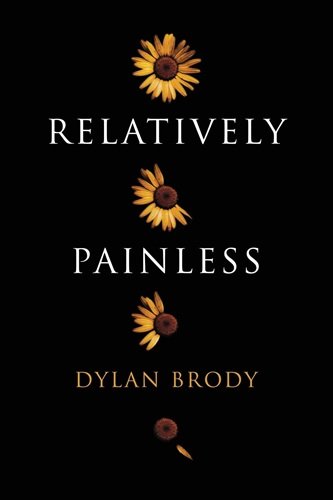
Relatively Painless by Dylan Brody (Atmosphere Press, 2020). Relatively Painless assembles a linked collection of vignettes following the Grunman family across several decades, tracing the arc from childhood to middle age with the precision of a tragicomic eye. At its center stands Daniel Grunman — a boy who grows into a stand-up comedian and writer — and his older sister Lindsay, a dancer and intellectual whose emotional life runs deeper and quieter than her brother’s performed wit. The book opens in childhood: Daniel and Lindsay are navigating the rituals and fault lines of their parents’ marriage. Paul, a professor with literary bohemian roots, and Ellen, a sharp, self-deflecting woman who masks feeling in chatter and cigarette smoke, model for their children both the warmth and the evasions that will shape them. Weight, appearance, social comparison, and competitive wit run through the family’s dinner-table conversations like chronic conditions nobody names directly.
The children absorb these patterns — Daniel through jokes, Lindsay through observation and a cool, puzzle-solving intelligence. Several stories follow Lindsay as an adult: most fully in “Funeral,” where she drives upstate to attend the burial of Michelle, her late partner, and faces Michelle’s mother Arlene — a woman who cannot quite say the word “lesbian” — in a parking lot standoff that shifts, unexpectedly, into something like grace. The scene demonstrates the book’s characteristic move: hostility softened by a snort, a shared gesture, an inherited tic that bridges unbridgeable positions. Daniel’s sections trace the education of a comedian — his father introducing him to Buster Keaton, the Marx Brothers, Chaplin; the backstage world of clubs and college towns; a late-night post-show debrief where Paul and Ellen, pleasantly soused, try to understand a heckler bit and end up accidentally excavating a family secret involving Allen Ginsberg. Comedy, in these pages, functions not as escapism but as the family’s primary emotional vocabulary — both its gift and its limitation.
The book closes with “Transparency,” a quiet lunch between Daniel — now a working writer, guarded and self-aware — and his aging mother Ellen, who still smokes outside restaurants, still reframes every silence as a new conversational gambit, still reaches for Scotch when iced tea will have to do. The final image — Daniel watching his mother through a restaurant window, maintaining just enough glass between them to love her fully — crystallizes the book’s emotional argument: that family love requires a certain managed distance, a pane through which we can see clearly without being consumed. Throughout, Brody writes in a register that keeps sorrow and comedy in exact counterbalance. The prose favors the precise sensory detail — the sound of frozen snow underfoot, the smell of match sulfur, the creaking of a fourth stair — and the rhythms of dialogue sharpen each character’s inner life without exposition. Relatively Painless delivers exactly what Jenny Lawson’s blurb promises: “the tragically funny and beautiful horror of family.”














Reviews
There are no reviews yet.